Research

Research Reports

Kramer&Co. provides in-depth research and insights on global technology trends and markets. We offer advisory services on research you might be undertaking in-house, guiding survey development and logic to help ensure the very best results from your research. We also offer custom research services for projects of all sizes. Our industry analysts are experts at both quantitative and qualitative research, and our studies help organizations assess buyer sentiment, business challenges, market drivers, and evaluate end-user demand.

We provide actionable intelligence based on real-world data rather than hypothesis, enabling technology leaders to make informed decisions, identify competitive opportunities, and align their solutions with evolving customer needs in an increasingly AI-driven environment. Whether you’re looking to understand market trends, evaluate competitive positioning, or develop strategic roadmaps, Kramer&Co.’s research delivers the clarity and direction your business requires.

Market Insights and News
  • Acumatica Vertrax acquisition

    Acumatica has acquired Vertrax, a cloud-native ERP and logistics provider built specifically for fuel marketers, propane distributors, and convenience retailers. The deal converts a decade-long ISV partnership into a dedicated business unit — and signals a broader PE-backed strategy of buying vertical expertise outright rather than waiting for the ecosystem to develop it.

  • Citrix Platform Flex

    Citrix Platform Flex is more than a product refresh — it's a fundamental rethinking of how Citrix goes to market and where channel partners fit in. With persona-based computing, a Flex credit consumption model, Azure-native DaaS, and a restructured distribution model through Arrow Electronics, Platform Flex raises as many questions as it answers for the partner ecosystem.

  • Google AI Overviews liability

    Germany's Regional Court of Munich has issued a landmark ruling holding Google directly liable for false and defamatory claims generated by its AI Overviews feature — claims that appeared in none of the cited sources. By treating AI-generated answers as Google's own speech, the court has set a precedent with sweeping implications for every enterprise deploying generative AI.

  • Commvault Microsoft Azure partnership

    Commvault and Microsoft have announced a multi-year strategic partnership that embeds Commvault's AI and cyber resilience platform as a native ISV service on Microsoft Azure. With MACC-eligible purchasing, unified procurement, and integrated recovery capabilities built for AI workloads, the partnership makes resilience a core part of the Azure fabric — not a separate tool to stitch in.

  • Verint Engage 2026

    Verint Engage 2026 opened with a frank reckoning on AI's failure modes and a concrete answer: Agent Factory, a composable orchestration environment for managing hybrid human and AI agent workforces at enterprise scale. With 12,000+ enterprise customers, six petabytes of CX data, and production proof points from FNB South Africa to NOS Portugal, Verint is making a serious case that the AI hype cycle is over.

  • RingCentral AIR Pro

    RingCentral is expanding AIR Pro with native AI agents embedded directly into RingCX workflows, announced at Customer Contact Week Las Vegas. New Autonomous Outreach and context-rich Intelligent Handoffs move the contact center from reactive cost center to proactive engagement engine — backed by a customer base that's grown over 70% year-over-year, with more than half already using AI.

  • Verint Engage 2026

    Verint Engage 2026 opens in Las Vegas as the first conference since Thoma Bravo's $2B acquisition merged Verint with Calabrio under new CEO Dave Rhodes. With AI ARR up 24% year-over-year but post-acquisition layoffs raising product continuity questions, here's what to watch on integration substance, AI outcomes, and the competitive pressure from bundled CCaaS platforms.

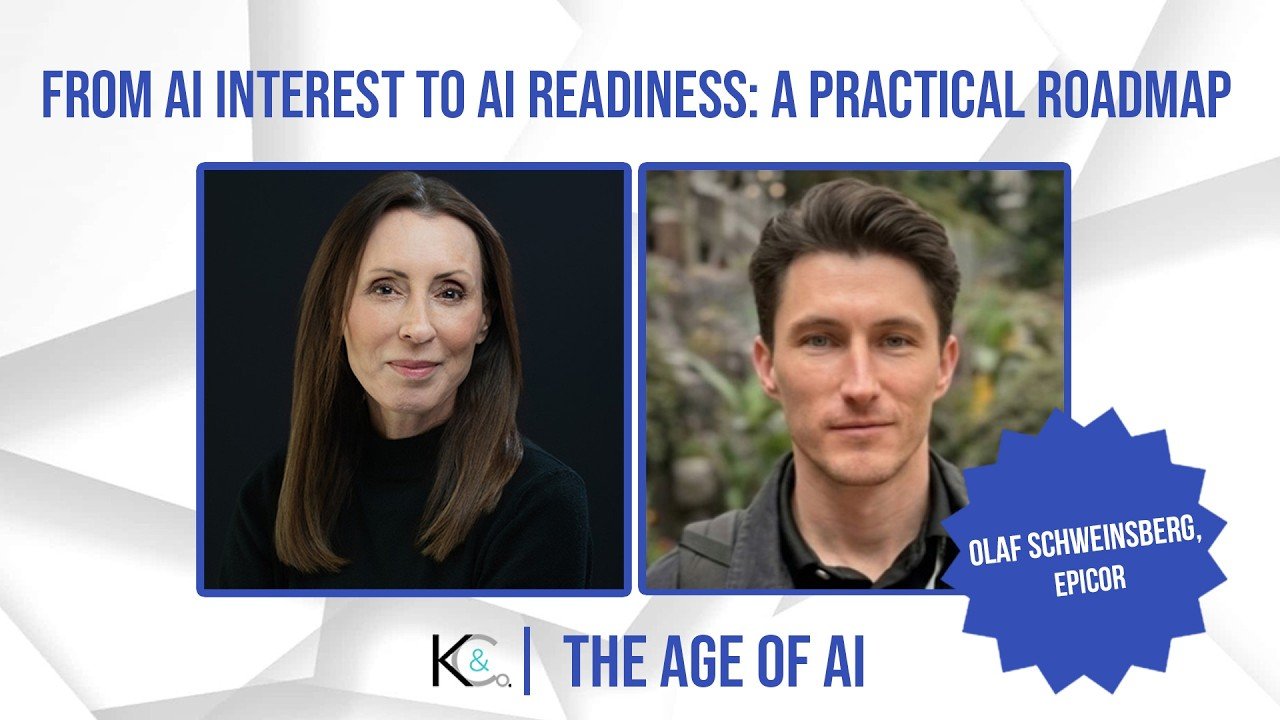
  • Epicor cognitive ERP

    Epicor CEO Steve Murphy opened Insights 2026 with an apology and unusual candor about AI hallucination rates, setting up the event's real argument: a 50-year manufacturing data ontology as a genuine AI moat. Analysts Shelly Kramer and Robert Kramer break down what's proven (a freight agent that cut variance from 19% to 1.5%), what's still roadmap, and what gaps remain on pricing and governance.