

Craig Honick is the Director of Research Operations for Kramer&Co. He is also the Founder and Principal Advisor at The Good People Research Company, a human-centered behavioral research firm with more than 25 years’ experience working with technology, financial, manufacturing, and consumer brand organizations worldwide.
An applied ethnographer and quantitative analyst, Craig leads multi-method research studies to discover the core drivers of organizational and market behavior. He’s a recognized authority on individual and group narrative and how narrative itself can impact the future of an enterprise, industry, municipality, region, or national culture. His analysis focuses on how organizations can most effectively maintain credibility, trust, and influence with various market segments as they emerge and evolve.
In addition to client work, Craig serves as a lecturer at the University of Virginia’s McIntire School of Commerce, an Entrepreneur in Residence at the University of Virginia’s Darden School of Business, a board member and former chair of the Charlottesville Business Innovation Council, and a strategic advisor to technology and fintech startups.
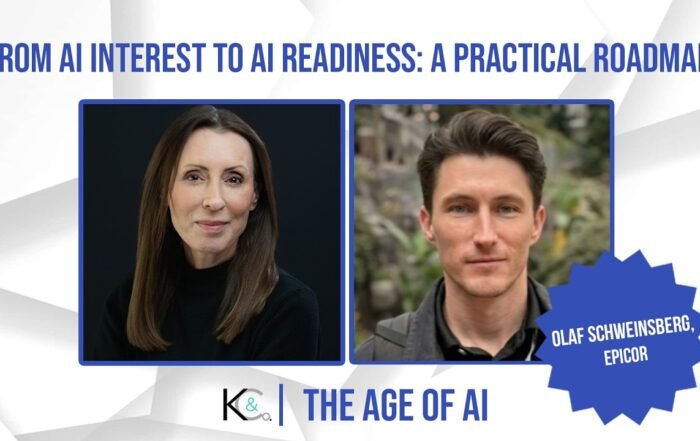
From AI Interest to AI Readiness: Inside Epicor’s Practical Roadmap for ERP Modernization
Most enterprises have already decided to pursue AI — the harder question is whether they're actually ready. Epicor Director of AI Product Management Olaf Schweinsberg joins the Age of AI podcast to unpack what readiness really requires: auditing data foundations, cleaning stale workflows, and building toward agentic capability through Prism's vertical ontology before a single agent is deployed.

DXC’s Customer Zero Journey: Inside the Amazon Quick Rollout Powering 115,000 Employees
DXC Technology served as "customer zero" for Amazon Quick, AWS's agentic AI platform, deploying it across 115,000 employees before taking it to clients. Global CIO Russell Jukes joins the Age of AI podcast to share what co-innovation with AWS actually looked like — and why adoption metrics, agent counts, and top-down rollouts all missed the point.

Connectivity, Context, Control: Why the Data Layer—Not the Model—Decides Whether Enterprise AI Works
Frontier AI models have become good enough that the model layer is behaving like a commodity — yet fewer than 10% of enterprises say their data infrastructure is ready for AI agents. CData VP of AI Architecture Amit Naik joins the Age of AI podcast to explain why connectivity, context, and control — not model quality — determine whether enterprise AI reaches production.
Acumatica Deepens Its Vertical Bench, Acquiring Longtime Partner Vertrax
Acumatica has acquired Vertrax, a cloud-native ERP and logistics provider built specifically for fuel marketers, propane distributors, and convenience retailers. The deal converts a decade-long ISV partnership into a dedicated business unit — and signals a broader PE-backed strategy of buying vertical expertise outright rather than waiting for the ecosystem to develop it.

Citrix Platform Flex: A Smart Pivot — But Channel Partners Are Watching Closely
Citrix Platform Flex is more than a product refresh — it's a fundamental rethinking of how Citrix goes to market and where channel partners fit in. With persona-based computing, a Flex credit consumption model, Azure-native DaaS, and a restructured distribution model through Arrow Electronics, Platform Flex raises as many questions as it answers for the partner ecosystem.

When AI Gets It Wrong, Who Pays? A German Court Just Answered That Question — and Google Doesn’t Like the Answer
Germany's Regional Court of Munich has issued a landmark ruling holding Google directly liable for false and defamatory claims generated by its AI Overviews feature — claims that appeared in none of the cited sources. By treating AI-generated answers as Google's own speech, the court has set a precedent with sweeping implications for every enterprise deploying generative AI.